
Table of Contents
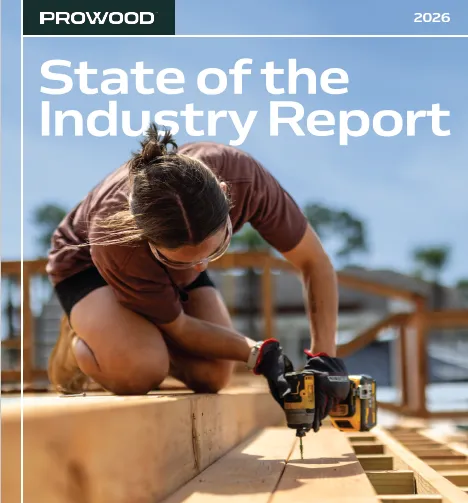
ProWood’s newly released 2026 State of the Industry Report focuses on one central idea: strengthening every link in the chain so pros can build with confidence. For professional deck contractors, the report offers a clear look at where the market is headed, and how to stay ahead of it.
That big-picture perspective comes to life through the voices of builders who are navigating those realities every day. Rather than keeping the discussion at the macro level, the report moves from market data and supply chain strategy to practical, on-the-ground insight, highlighting how today’s conditions are shaping real design decisions, framing choices, and jobsite priorities.
Specifically, the report summarizes a conversation between ProWood’s brand marketing manager Ashley VanderWall, and Sean Collingsru, Premier Outdoor Living and Jonathan Moeller, Colorado Custom Covers & Decks.
Ashley’s first question to the duo: “How would you describe deck substructure in the simplest terms?”
Sean replies, "I look at it as the foundation of any deck. It’s not going to be stealing the show visually, but if you don’t do it correctly, it will detract from the finished product.” Jonathan agrees, saying it is the “backbone” of the deck.
When asked what do they suggest when choosing the right material for a deck’s foundation. Jonathan says pressure-treated, always. “The return on investment is decades of dependable performance at a more practical cost than the alternatives.”
Sean says pressure-treated is the standard for his company’s projects. “With pressure-treated, you have something that’s time-tested, easily accessible, and proven to perform at a high level.”
When asked what other primary considerations Sean and Jonathan make concerning substructure, such as deck height, building code compliance or adding a hot tub, Sean says in a complicated build, that’s a conversation best had with an architect or engineer.
With Jonathan in Colorado and Sean in the Northeast, climate affects how they build their decks. Jonathan says they will get snow followed by 70-degree day, then back to a 32-degree day with more snow. Major fluctuation means they need materials that won’t move or twist.
For Sean, the Northeast has bouts of heavy rain, humidity and cold temperatures in the winter. They design their projects with a path for the water to escape. They rely on pressure-treated wood made for ground contact like UC4A or UC4B.
They both stress added care to protect the deck from the outset, such as with flashing tape, means a deck’s premature failure can be preventable.
That same mindset of long-term thinking, they suggest, is exactly what today’s market demands from builders and suppliers alike.
A Market Reset, Not a Slowdown
The report adds that between changing market conditions, evolving consumer expectations, and new economic pressures, the home improvement industry is meeting challenges head-on—and finding new opportunities in the process.
The home improvement sector reached $574 billion in 2024, and while forecasts have been tempered by tariffs, labor shifts, and mortgage pressures, ProWood characterizes 2025 as a recalibration year, not a downturn.
For deck builders, that aligns with what many are seeing on the ground: steady demand for outdoor projects, repairs, and upgrades. Homeowners may be more intentional with spending, but they’re still investing, especially in projects that enhance durability, comfort, and long-term value.
Older homeowners, particularly age 55 and up, continue to drive more than 75% of renovation spending, while Millennials and Gen Z are reshaping expectations around personalization and sustainability. That means contractors who can speak to longevity, performance, and environmental responsibility, without sacrificing aesthetics, are well positioned.
Supply Chain Reality: Control What You Can
The report underscores continued variability in raw materials, shifting lead times, and cost pressures influenced by global trade and freight dynamics. For contractors, the takeaway isn’t to expect perfection, it’s to build stronger relationships.
ProWood emphasizes three areas that matter most to pros:
- Localized sourcing and distribution to shorten lead times
- Consistent end-to-end customer experiences
- Clear product education and storytelling
For deck builders, that translates to partnering with reliable dealers, planning jobs with realistic material timelines, and choosing suppliers that prioritize consistency and traceability.
Sustainability Is Becoming a Selling Tool
Nearly a quarter of industry experts surveyed in 2024 identified sustainability as a leading consumer trend. ProWood details efforts to extend lumber lifespan, incorporate recycled treatment components, and recapture chemical solutions during processing.
For deck contractors, this is a differentiator. Homeowners increasingly want to understand sourcing, preservation, and long-term environmental impact. Being able to explain why treated lumber lasts decades, and how preservation extends carbon storage, adds credibility during the sales process.
The Workforce Question
With an estimated 500,000 additional workers needed to meet 2026 demand, according to the Associated Builders and Contractors, workforce development remains a pressing issue. The report highlights growing diversity in construction and expanded training initiatives.
For contractors, that reinforces the importance of mentorship, skill development, and investing in the next generation of builders. The future of decking depends as much on people as it does on products.
For professional deck contractors, ProWood’s 2026 State of the Industry Report is less about theory and more about practical momentum. Demand remains steady. Innovation is improving performance. And supply chain strength starts with partnerships.
The full report is available from ProWood at www.prowood.com.