

Table of Contents
If you’re searching for backyard deck ideas 2026, how to design a deck, or custom outdoor living space inspiration, you’re not just planning a project. You’re planning a transformation.
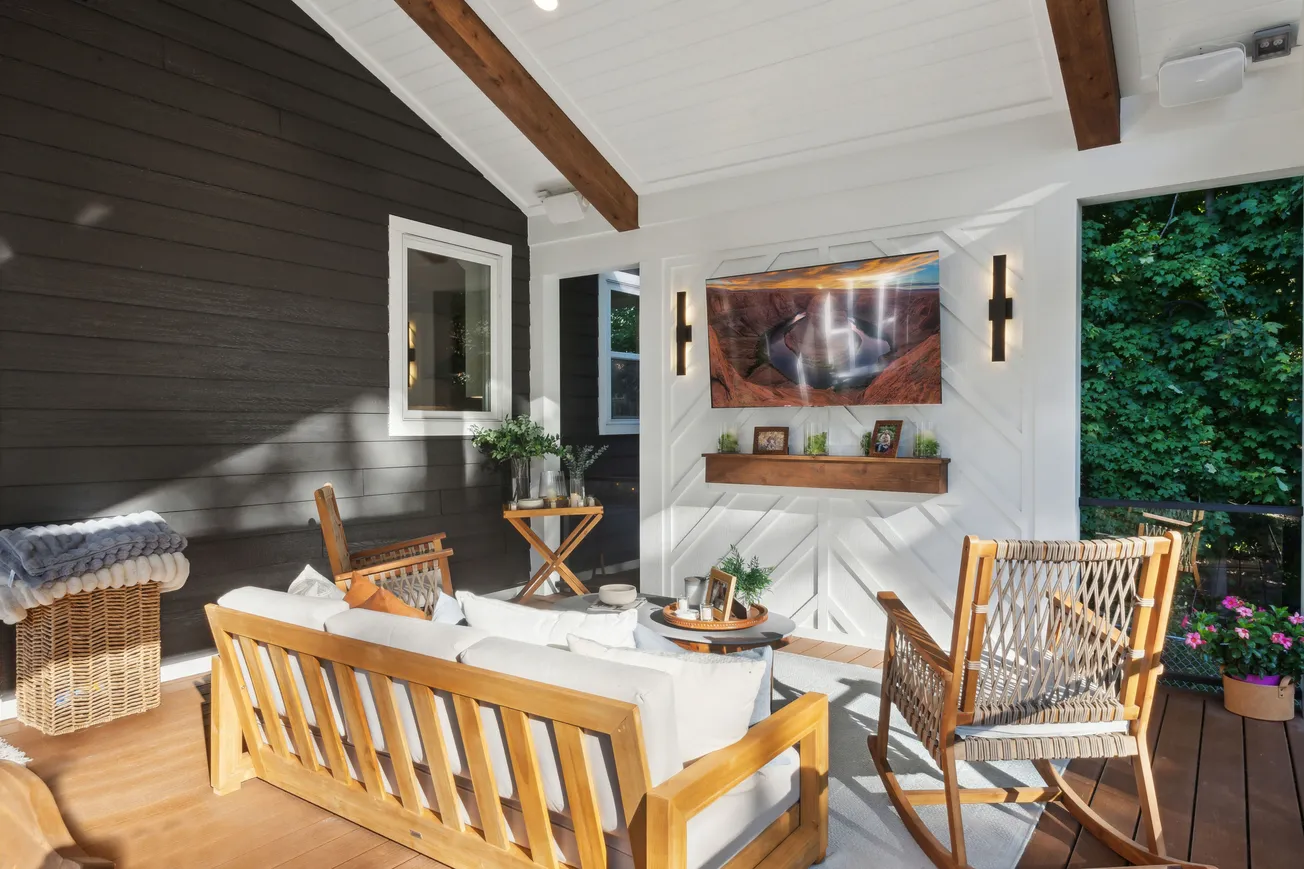
In 2026, homeowners aren’t building simple platforms. They’re creating intentional outdoor living spaces—environments designed around how they want to feel, function and live every day.
Recent industry trend forecasting — including research platforms like Westlake Royal’s TrendLine—points to a shift toward what many are calling the “intentional home.” That same mindset is reshaping deck design across the country.
If you’re planning a custom deck or full backyard renovation, here are the key 2026 trends to consider, and how to apply them to your own project.
1. Design With Nature in Mind (Biophilic Influence)
Search behavior shows rising interest in biophilic design, a movement centered on bringing natural textures, light and organic materials into everyday spaces.
In practical deck terms, that means:
- Wood-look decking in earthy tones
- Stone accents or natural material features
- Preserving views instead of blocking them
- Integrating planters or greenery
- Blurring the line between indoor and outdoor spaces
When homeowners search modern deck design ideas, they’re increasingly drawn to decks that feel connected to landscaping, not separate from it. Before choosing materials, ask:
- Does this palette complement the yard?
- Does the layout frame the best views?
- Does the deck feel integrated with the home’s architecture?
The goal isn’t to mimic nature, it’s to respect it.
- Elevated Simplicity in Deck Design
Another major 2026 shift is toward refined simplicity. Clean lines. Thoughtful details. Quality over excess. For homeowners researching custom deck design, this trend shows up as:
- Minimalist railing systems (cable, glass, slim-profile metal)
- Consistent board patterns
- Balanced proportions
- Subtle picture framing details
- Integrated lighting rather than decorative clutter
Quiet luxury in deck design doesn’t mean expensive. It means intentional. Instead of adding more features, focus on:
- Materials that age well
- Symmetry and spacing
- Strong transitions between levels
A deck that feels calm and cohesive often feels more valuable than one overloaded with design elements.
3. Warm Neutrals Are Replacing Cool Grays
Homeowners searching deck color ideas or composite vs. wood deck options are gravitating toward warmer neutrals in 2026. Instead of stark grays, trending palettes include:
- Soft greiges
- Warm browns
- Driftwood tones
- Creamy off-whites for trim
- Earth-inspired accents
These tones create harmony between siding, railing, decking and landscape.
If you’re evaluating decking materials, look at samples outside in natural light, not just under showroom lighting. Warm neutrals tend to feel more inviting and less trend-dependent long term.
In addition, new colors are on the horizon this year. Manufacturers are responding to a growing demand for cedar-like composites and affordable decking that resembles hardwoods such as ipe.
4. Cohesive Color Stories (Color Drenching Influence)
Designers are increasingly carrying one color family across multiple surfaces for a cohesive look. In deck design, this can translate to:
- Decking and railing within the same tonal range
- Trim and fascia that complement siding
- A unified color strategy between outdoor kitchen cabinets, pergolas and flooring
Homeowners researching deck layout ideas often focus on structure. But color cohesion can make even simple layouts feel architecturally intentional.
Instead of mixing multiple high-contrast tones, consider how a consistent palette can elevate the entire outdoor space.
5. Resilience Is No Longer Optional
Searches related to weather resistance, fire performance and impact durability are rising. Homeowners planning decks in 2026 are asking:
- How does this material handle extreme sun?
- Is it moisture resistant?
- What is the maintenance requirement?
- How long will it last?
- Does it resist fading or warping?
When researching how much does a deck cost in 2026, it’s important to look beyond upfront pricing. Lower-maintenance materials may cost more initially but reduce:
- Annual sealing or staining
- Replacement frequency
- Repair costs
An intentional outdoor living space balances beauty with performance.
6. Zoning: The Layout Strategy Homeowners Are Searching For
One of the most common searches in deck planning is deck layout ideas.
In 2026, that increasingly means zoning. Instead of one oversized platform, modern decks often include:
- A dining zone near the kitchen
- A lounge zone positioned for shade or views
- A grilling or outdoor kitchen area
- A fire feature space
- Clear walkways between zones
When planning your backyard deck, sketch how you move through the space. Good flow prevents crowding and makes the deck usable daily, not just for gatherings.
7. Design First. Size Second.
A common mistake when searching backyard deck ideas is assuming bigger equals better. Instead, focus on:
- Proper furniture clearance
- Stair placement
- Rail visibility
- Privacy needs
- Sun orientation
Professional deck builders think in terms of circulation and structure. If you plan to hire one, come prepared with lifestyle goals and preferred aesthetics, but allow them to refine the proportions. The best decks feel balanced, not oversized.
8. Use Visualization Tools Before You Commit
Homeowners today want clarity before construction begins. Whether through AI-powered design tools, renderings or physical samples, visualizing materials in context helps prevent regret.
Before signing a contract, confirm:
- The color combinations
- Railing style
- Lighting placement
- Level transitions
- Board orientation
When you can clearly picture the finished space, you’re more likely to feel confident in your decisions.
Designing an Outdoor Living Space That Lasts
If you’re searching:
- Deck design ideas 2026
- Custom outdoor living space
- Composite vs wood deck
- Outdoor kitchen deck ideas
- Deck builder near me
Pause before choosing finishes. Start with intention. Ask these questions:
- How do I want to use this space every week?
- What materials align with my maintenance tolerance?
- Does this design feel timeless?
- Will it perform in my climate?
- Does it reflect my home’s architecture?
The strongest backyard deck designs in 2026 won’t chase trends. They’ll quietly embody them through thoughtful materials, cohesive palettes, structural integrity and purposeful layout. And that’s what turns a deck into something more than an addition. It turns it into part of the home.